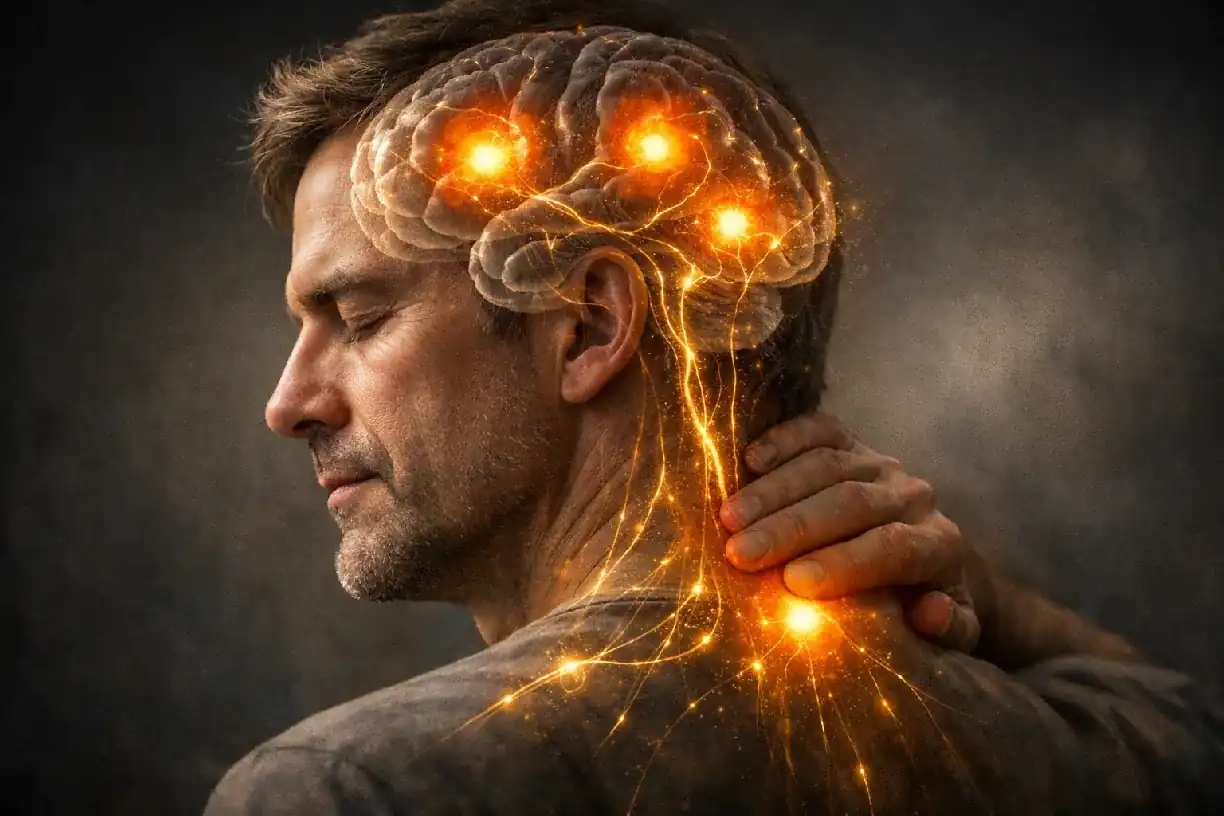
A painful shoulder, neck tension, persistent back pain... These physical discomforts are often accompanied by unusual fatigue, sleep disturbances, sometimes even a drop in morale that is difficult to explain. This is no coincidence. The body and mind are intimately linked, and this connection deserves our full attention.
Invisible stress: what pain does to your body
When pain sets in for the long term, even if moderate, the body remains in a permanent state of alert. This constant vigilance activates the stress system and increases the production of cortisol, an hormone also known as the "stress hormone".
The problem? Chronically high cortisol levels fatigue the adrenal glands and disrupt sleep. Chronobiology research shows that people suffering from persistent pain indeed have disrupted cortisol cycles, which explains this feeling of exhaustion even after a night of rest.
It's a well-documented vicious cycle: pain disrupts sleep, lack of sleep amplifies pain sensitivity, and fatigue accumulates. It's not uncommon to find that by treating physical pain, energy naturally returns, and sleep improves.
This fatigue is not "all in your head." It is accompanied by low-grade inflammation throughout the body, measurable by blood tests. This chronic inflammation also affects the brain, particularly areas that regulate mood. Irritability, anxiety, or sadness without apparent reason often find their source in this physiological reality.
The brain transforms: the neuroplasticity of pain
What is fascinating—and a little unsettling—is that chronic pain literally alters the brain's structure. Neuroscience has shown that certain brain regions, like the hippocampus (essential for memory and emotions), can decrease in volume in people living with persistent pain.
This transformation explains why chronic pain and depression are so often linked. Statistics are clear: people suffering from persistent pain have a significantly higher risk of developing anxiety or depression. This is not a character weakness; it is a biological reaction.
The brain, constantly mobilized to manage pain signals, produces less serotonin and dopamine – these neurotransmitters allow us to experience pleasure and joy. A seemingly trivial contracture, neglected for months, can thus progressively lead to a loss of interest in activities once enjoyed, to social withdrawal. The connection is direct and measurable.
The good news: everything can be reversed
Fortunately, the brain has an extraordinary capacity to regenerate. If pain can transform it negatively, proper care can help it regain its balance.
This is where Chinese medicine reveals its full richness. Acupuncture, for example, doesn't just block pain locally. Neuroimaging studies confirm it: it activates the natural pain regulation circuits and stimulates endorphin production. Treating chronic pain with acupuncture often significantly improves mood, even when that wasn't the initial goal.
Therapeutic massages and cupping also act on this body-mind connection. By releasing muscle tension and improving circulation, these techniques reduce the warning signals sent to the brain. The nervous system can finally exit its survival mode. After a few sessions, better quality sleep, less irritability, and a renewed desire to share moments with loved ones are commonly observed benefits.
We say it's better to maintain your health when everything is going well than to have to repair it when everything is going wrong. Taking care of your body today also means protecting your emotional and mental balance tomorrow.
The essential message is simple: these "small" pains that set in deserve attention. This morning stiffness, this recurrent tension in the shoulders, this back pain that keeps coming back – these are important signals. Ignoring them risks seeing vital energy gradually deplete, spirits darken, and joy of life diminish.
Well-being is a whole, and each part deserves attention and kindness.
Persistent pains, even mild ones, can be treated before they become too deeply entrenched. Breaking this cycle is possible.