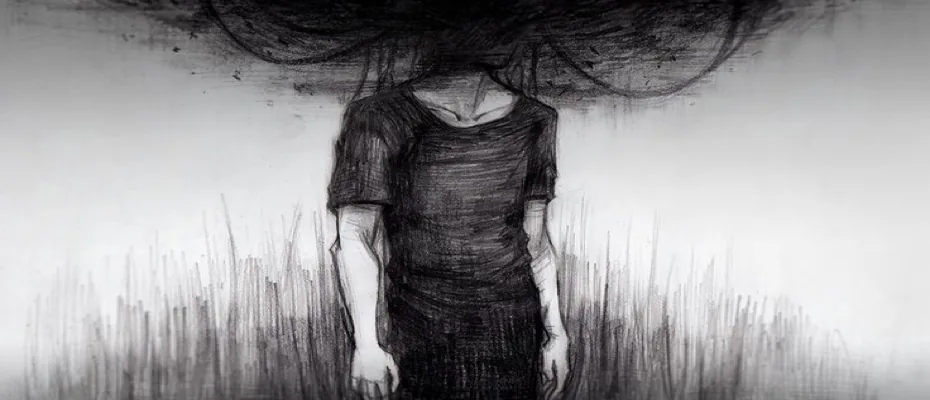
Sophie (fictitious name) comes for a consultation after three years of medical struggles. Migraines, a perpetually bloated stomach, relentless fatigue. She's undergone every possible test. The result? "Everything is normal; it's probably psychosomatic."
She asks: "So it's all in my head? My pain isn't real?"
I hear this regularly. And each time, I give the same answer: No, your symptoms are very real. It's simply that your brain and your body are one.
What no one explained to her is that psychosomatic doesn't mean imaginary. It means that her brain, her emotions, and her body speak the same language — a language made of perfectly measurable hormones, neurotransmitters, and nervous signals.
Chinese medicine has always known this! For millennia, it has said that anger affects the Liver, anxiety impacts the Heart, rumination disturbs the Spleen, sadness weakens the Lungs, and fear exhausts the Kidneys. Today, neuroscience is spectacularly proving it right!
The Emotional "Bill"
You hear bad news. Within seconds, your body releases cortisol and adrenaline. This is normal; it's designed to mobilize you in the face of danger. The problem? It's when it lasts.
Sophie has been living with anxiety for years. Her body continuously produces cortisol. And chronic cortisol is like having your foot on the accelerator 24/7: your immune system gets exhausted, inflammation settles everywhere, and your body no longer repairs itself properly. The result: repeated infections, chronic pain, constant fatigue, digestive problems.
This is exactly what Chinese medicine means when it talks about emotions that "傷 (shāng) injure" the organs. Same phenomenon, two different languages.
Now imagine a cable running from your brain connecting to your heart, lungs, and stomach. This is the vagus nerve. Its job? To calm you, help you digest, and repair yourself. When it functions well, you manage your emotions easily. When it's blocked, you're stuck in permanent alert mode.
Marie (fictitious name) had a completely unregulated gut for 10 years. She learned cardiac coherence — a simple breathing technique, 10 minutes a day. It activates the vagus nerve. Within three months, with this plus acupuncture, her symptoms decreased by 70%. This is why, after an acupuncture session, many patients tell me they feel relaxed, their stomach rumbles, and they feel like sleeping. It's the signal that rest mode is taking over.
And here's something that always surprises people: do you know where 90% of your serotonin is produced? Not in your brain. In your gut. Serotonin is the chemical messenger of well-being. Your gut bacteria produce enormous quantities of it and communicate directly with your brain via the vagus nerve.
It's a constant dialogue: your stress disturbs your bacteria, your unbalanced bacteria send bad signals, your brain receives these signals and produces more anxiety, anxiety increases your stress... A vicious cycle. That's why anxious patients often also have digestive problems. It's not a coincidence. It's the same system.
Let's take a concrete example: I see people who "swallow" everything at work, at home. They say nothing, they just take it. In Chinese medicine, anger "blocks the Qi of the Liver", which results in: a lump in the throat, tense shoulders, headaches at the temples, a bloated stomach, irritability at the slightest thing. In modern science, we say that anger keeps your nervous system in constant fight mode — your blood pressure rises, your muscles are tense, your cortisol remains high, your digestion is blocked. The same mechanism, viewed differently.
"Chronic stress doesn't just suppress immunity — it unbalances it, simultaneously promoting inflammation while weakening our defenses against infections."
From Tension to Symptom: Acting Before It's Too Late
You don't get there overnight. Initially, a major emotion, a period of stress — your body reacts normally, and it resolves itself as soon as the situation improves. Then it settles for several months: stress becomes your daily life with a toxic job, a complicated family situation, financial worries. You start feeling persistent fatigue, unrefreshing sleep, a sensitive stomach, frequent colds.
After several years, your body is exhausted. Inflammation is everywhere. That's when real health problems arrive: hypertension, autoimmune diseases, depression that resists treatment, chronic pain. Sophie was at this point when I first saw her.
The good news? As soon as you understand this, you can act. No need to choose between Chinese medicine and modern medicine. We take the best of both.
Breathing makes a huge difference: 5 minutes of cardiac coherence, 3 times a day. Simple and effective. Moving regularly too — walking, swimming, yoga, Tai Chi. No need to run a marathon. On the dietary side, more vegetables, fiber, fermented foods, and less sugar and ultra-processed products. Your gut bacteria will thank you.
Acupuncture regulates your nervous system in a measurable way. It's not magic; it's nerve stimulation. And sometimes, we need help to release emotions and change thought patterns — meditation or therapy are invaluable for this.
The secret? Doing several things at once. Combining acupuncture, breathing, and some dietary changes yields much faster results than a single isolated approach.
Your Body Speaks to You
Your emotions are not separate from your body. Every anxious thought changes your chemistry. Every suppressed anger increases your inflammation. Every moment of relaxation helps your body repair itself.
When your doctor says "it's psychosomatic," he's not saying it's imaginary. He's just saying the source is emotional. But the consequences? They are very much physical.
Your body speaks to you with the only words it knows: symptoms. Fatigue, pain, digestive problems... these are messages. It's telling you that something in your life needs to change.
In my practice, I have seen people who suffered for years regain their energy, their sleep, their serenity in just a few months. It's not miraculous. It's just that we are finally addressing the true cause.
The first step is observation. Noticing these tensions that accumulate, these emotions that get stuck, these patterns that repeat. The mindfulness of this constant dialogue between your emotional life and your body is therapeutic in itself.
In the clinic, we create the space for this dialogue to become conscious, for these blockages to be released. Acupuncture is also that: a moment when your nervous system can finally exit survival mode and reorganize itself. A moment when your body remembers it knows how to heal itself.
Your Liver and your anger. Your Heart and your anxiety. Your Spleen and your ruminations. Everything is connected, and everything can transform.