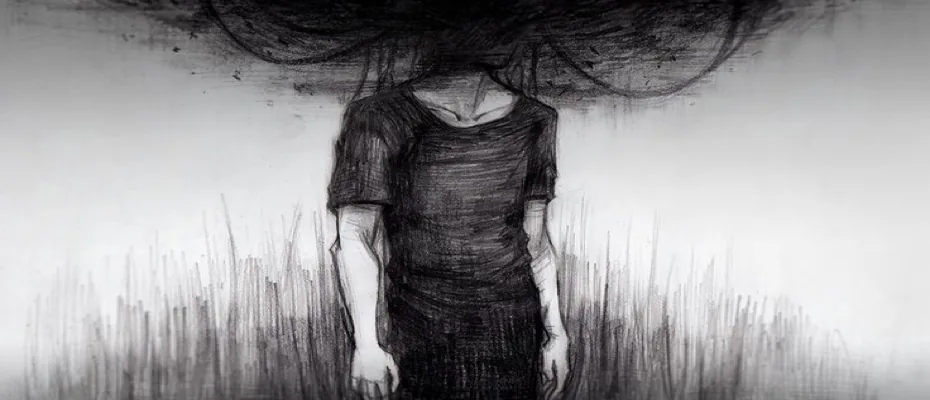
Overthinking. Over-anticipating. Over-ruminating. Mental fatigue that accumulates for no apparent reason, a stomach that knots up as soon as pressure mounts, nights when the brain refuses to shut down. If you recognize yourself in these lines, know that Chinese medicine has a word for what you are experiencing — and an explanation that might surprise you.
When the belly and the mind tell the same story
In traditional Chinese medicine, there is a deep correspondence between the digestive sphere and the mental sphere. The Spleen — in the energetic sense of the term, much broader than the anatomical organ — is responsible both for transforming food into energy and for "digesting" experiences, emotions, and information we absorb every day. The body processes matter exactly as the mind processes thoughts. It's the same movement, the same organ, the same energy.
This correspondence is not abstract. It is clinically observable: someone who suffers from chronic digestive disorders — bloating, slow digestion, stomach sensitive to stress — almost always thinks a lot. And someone who ruminates, worries, gets stuck in a loop, almost always has a weakened stomach. Two sides of the same coin.
When the Spleen is exhausted — by intellectual overwork, chronic stress, an inappropriate diet or simply the hectic pace of our lives — it loses its transformative capacity. Food is less well assimilated. And thoughts no longer resolve themselves. They circle. This is what TCM calls a Spleen Deficiency: the energy of this organ is exhausted, and with it, the ability to find a stable inner balance.
Other imbalances often superimpose themselves. Stagnation in the Liver — when energy no longer circulates freely in the body — brings irritability, chest tension, repressed frustration. A weakening of the Heart can be added with palpitations, emotional hypersensitivity, and nocturnal awakenings. The picture is rarely simple. But in the vast majority of cases, the Spleen is at the heart of the imbalance — and it is often where one must begin.
Chronic anxiety, in Chinese medicine, is not a character trait or an inevitability. It is the signal of an exhausted organ — and a ground that can be rebuilt. This nuance profoundly changes the therapeutic approach.
What can be done — starting today
The Spleen responds well to daily actions. A few simple adjustments, maintained over time, can make a real difference in the long run.
Diet first. The Spleen hates cold, raw, and excessive sugar. Eating warm, cooked, at regular hours — and if possible without screens or distractions — is already giving it the conditions to work properly. Ginger, cinnamon, whole grains, well-cooked legumes are its allies. Conversely, iced smoothies, daily cold salads, and sugary snacking exhaust it in silence. This is not a diet, it is a way of eating that respects digestive energy.
Breathing as an immediate regulator. A simple and effective technique: inhale for 4 counts, hold for 4 counts, exhale for 6 counts. Practiced 5 to 10 minutes a day — ideally in the morning before getting up or in the evening before sleeping — it regulates the autonomic nervous system and sends the signal to the Spleen that the danger has passed. No need for advanced meditation. This is basic physiology, accessible to all.
Two acupressure points to know. Zu San Li — Stomach 36, located four finger-widths below the kneecap, slightly to the outside of the tibia: massage this point in small circles for 2 minutes on each side to tonify the Spleen's energy and stabilize the mind. Nei Guan — Pericardium 6, three finger-widths above the wrist between the two central tendons: remarkable for calming palpitations, relieving chest oppression, and soothing an agitated mind. These two points can be stimulated every evening with the thumb, without any special equipment.
Movement, but the right kind. Slow walking, Qi Gong, Tai Chi — anything that circulates energy without exhausting the body — is exactly what the Spleen needs. Intense and competitive exercise can paradoxically worsen things when the deficiency is profound. Twenty minutes of conscious walking is often worth more than an hour of exhausting sport followed by a collapse.
Acupuncture allows for a deeper rebalancing — by precisely targeting the meridians involved according to each patient's presentation. But daily actions are not optional. They form the ground on which any treatment can take root.