Acupuncture in Meudon (92)
Chinese medicine views the body as an interconnected system where everything communicates: your physical pains, your digestion, your sleep, your emotional state. My approach is to understand these connections to identify deep imbalances and help your body return to its natural balance.
Acupuncture is not a miracle cure, but an ancient method whose effectiveness is now validated by numerous scientific studies. It works by stimulating specific points that regulate your nervous system, hormones, and natural repair processes.
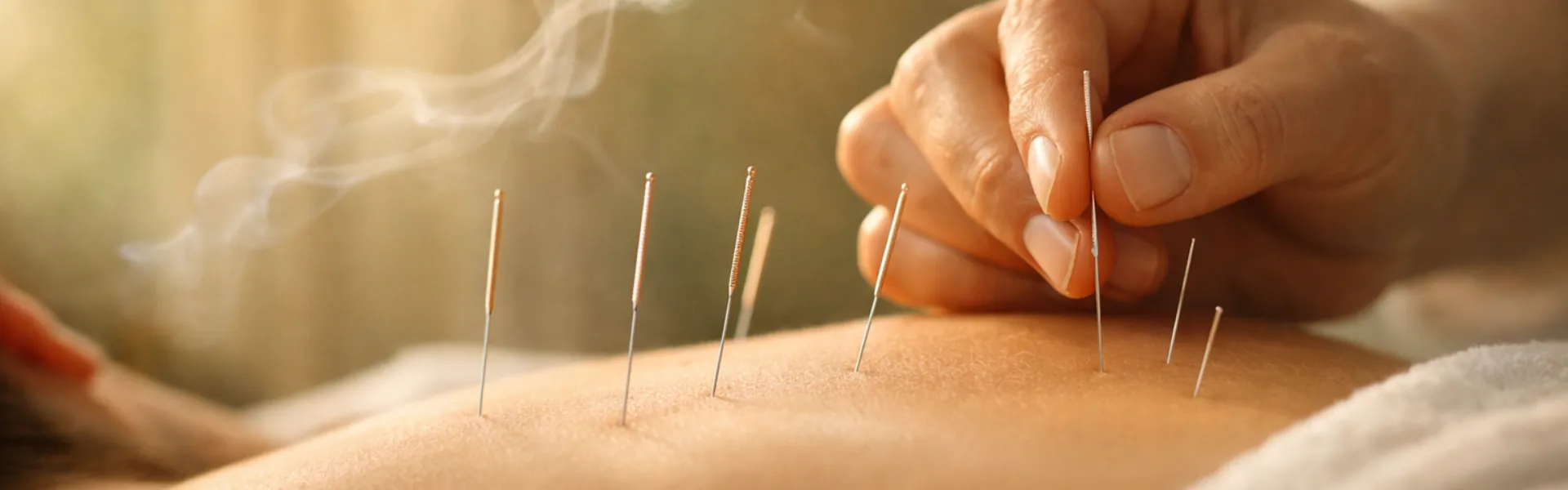
Acupuncture and Chinese Medicine in Meudon
How does acupuncture work?
In Chinese medicine, we speak of Qi (vital energy) that circulates through channels called meridians. A blockage or imbalance in this circulation manifests as symptoms: pain, fatigue, digestive problems, stress...
In modern scientific language, acupuncture acts on several levels:
Nerve regulation
Stimulation of the parasympathetic nervous system, which activates relaxation and repair mechanisms.
Pain modulation
Release of endorphins (natural painkillers) and modification of pain perception at the cerebral level.
Reduction of inflammation
Measurable action on inflammatory markers and improvement of local circulation.
Hormonal balance
Regulation of cortisol (stress hormone) and other hormones involved in sleep, mood, and digestion.
These two perspectives – Chinese and modern – describe the same phenomenon with different vocabularies. The important thing is the result: your body regains its capacity for self-regulation.
Therapeutic Indications
The World Health Organization recognizes the effectiveness of acupuncture for numerous pathologies. Here are the most common reasons for consultation in my clinic:
- Musculoskeletal pain: low back pain, neck pain, sciatica, tendinitis
- Headaches and migraines: cranial tension, recurrent migraines
- Stress and anxiety: burnout, rumination, sleep disorders
- Digestive disorders: irritable bowel syndrome, bloating, acid reflux
- Gynecological problems: dysmenorrhea, premenstrual syndrome, fertility problems, menopause
- Chronic fatigue: persistent exhaustion, lack of energy
- ENT disorders: seasonal allergies, rhinitis, chronic sinusitis
- Support for withdrawal: tobacco, craving and stress management
Course of a session
Interview and diagnosis
We discuss your symptoms, health history, sleep, digestion, and emotional state. I then perform a Chinese pulse diagnosis and tongue observation – two essential diagnostic tools in Chinese medicine. The goal is to understand the underlying energetic imbalance of your symptoms.
Selection and insertion of needles
I select the acupuncture points based on our preliminary discussion. The needles used are sterile, single-use, and extremely fine (approximately 0.25 mm in diameter). Most patients feel only a slight sensation, or nothing at all. You remain dressed; only the treated areas are uncovered.
Therapeutic rest time
You lie down comfortably while the needles work. Many patients fall asleep, a sign that the nervous system switches to parasympathetic mode (rest and repair). Depending on the needs, I may supplement the treatment with moxibustion (heat), cupping, or electrostimulation.
Personalized advice
At the end of the session, I provide recommendations adapted to your situation: breathing exercises, dietary adjustments according to our preliminary discussion, self-massage points. The idea is to empower you to take an active role in your health between sessions.
My practice
My approach is holistic: I do not treat an isolated symptom, but seek to understand how different aspects of your health interact. Are your digestive problems related to your stress? Do your lower back pains have a connection to your chronic fatigue? This comprehensive view helps identify the root causes rather than just masking the symptoms.
The clinic is located at 9 rue Paira in Meudon, an 8-minute walk from the Meudon Val Fleury RER station (line N). It is a space designed to promote calm and relaxation, conducive to quality therapeutic work.
Frequently Asked Questions
Is acupuncture painful?
No. Acupuncture needles are extremely fine – much thinner than a standard medical needle. Most patients feel only a slight sensation upon insertion, or nothing at all. Some points may produce a tingling, warm, or heavy sensation, which we call "Deqi" in Chinese medicine – this is a sign that the point is correctly stimulated. Many patients find the experience relaxing enough to fall asleep during the session.
How many sessions are needed?
This depends on the nature and chronicity of the problem. For a recent acute condition (pain following a strain, temporary stress), 3 to 5 sessions may suffice. For chronic conditions present for several years, a protocol of 8 to 12 sessions, weekly at the beginning, is generally recommended, with a progressive spacing as improvement stabilizes. We will regularly review your progress together to adapt the follow-up to your evolution.
Can acupuncture replace medical treatment?
No, acupuncture is not a substitute for medical follow-up. It is a complementary approach that can relieve certain symptoms, improve your quality of life, and, in some cases, allow for a gradual reduction of medications – always under medical supervision. Never change your treatment without your doctor's agreement. The ideal is an integrative approach where conventional medicine and Chinese medicine complement each other.
Are there any contraindications?
Contraindications are rare. Acupuncture is not recommended in cases of severe clotting disorders or the presence of a pacemaker (for electrostimulation only). During pregnancy, certain areas and points are avoided as a precaution. We will discuss these questions together during the first appointment to adapt the treatment to your specific situation.