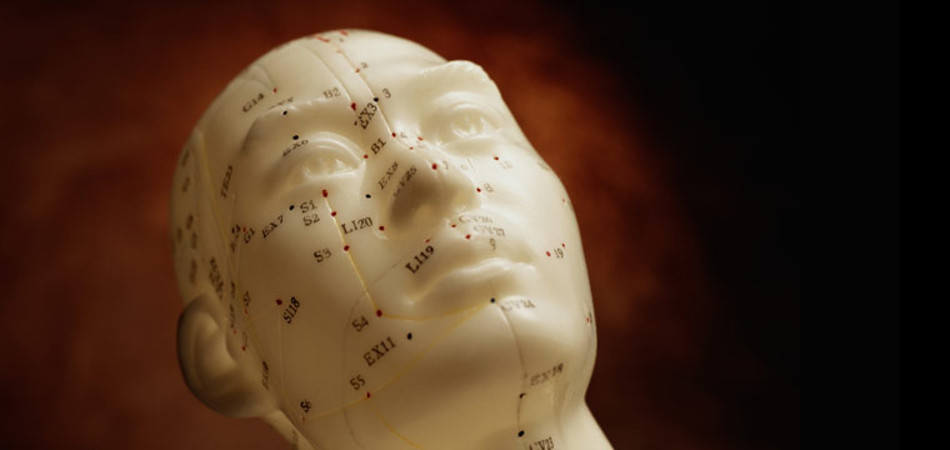
A meridian is a type of channel through which energy ("Qi", pronounced "chee") and blood circulate. On one end, it is connected to a finger or an extremity, and on the other, to an organ or a viscus. These are the main meridians (in addition to which there are 8 other meridians known as the "extraordinary" meridians, which are different in nature).
The human body is thus traversed by a network of 12 main meridians, made up of a number of acupuncture points, and distributed symmetrically between the right and left sides:
- Large Intestine – 20 points
- Triple Heater – 23 points
- Small Intestine – 19 points
- Stomach – 45 points
- Gallbladder – 44 points
- Bladder – 67 points
Each of these meridians is named after the viscus to which it is connected: for example, we speak of the heart meridian or the gallbladder meridian. When the circulation of Qi or blood is deficient in one or more of these meridians, a disorder occurs. This deficiency can take the form of:
- blockage
- counterflow
- poor circulation
When faced with an observed pathology, the goal of the TCM practitioner—through its 5 pillars—is to regulate any dysfunction hindering the proper circulation of Qi and/or blood in the meridians. The person thus treated can see their condition improve. The study and understanding of the meridians is therefore fundamental!
Existence
The identification of the meridians is the result of many years of observation and experience in treating pathologies. It has been observed that stimulating (by "dispersing" or "tonifying" energy) different points on the body had an effect on the functioning of the internal organs. For instance, a certain point on the knee will influence the stomach, while another point on the hand can act on the lungs… Furthermore, many internal conditions manifest as painful areas on the skin, following precise linear pathways; for example, a heart in so-called "excess" will cause pain along the inner part of the arm.
As a result, the meridians can reflect an internal pathology long before the affected organ itself does.
The physical existence of meridians has also been scientifically demonstrated. Indeed, German researchers have succeeded in imaging the map of the meridians using thermographic cameras, after heating specific points! (See the article).
Biorhythms
The circulation of the energy flow through the meridians is subject to an ebb and flow over the 24 hours of the day. Each meridian thus undergoes an intensification of energy flow, which lasts for 2 hours. This property helps in understanding a complex syndrome, which may appear during the day and be more pronounced at certain hours. For example, pathologies related to the heart generally worsen around noon, while those of the lung worsen before dawn, etc.
This cycle of energetic tides is represented as follows:
- 11 a.m. - 1 p.m. = Heart
- 1 p.m. - 3 p.m. = Small Intestine
- 3 p.m. - 5 p.m. = Bladder
- 5 p.m. - 7 p.m. = Kidneys
- 7 p.m. - 9 p.m. = Pericardium
- 9 p.m. - 11 p.m. = Triple Heater
- 11 p.m. - 1 a.m. = Gallbladder
- 1 a.m. - 3 a.m. = Liver
- 3 a.m. - 5 a.m. = Lungs
- 5 a.m. - 7 a.m. = Large Intestine
- 7 a.m. - 9 a.m. = Stomach
- 9 a.m. - 11 a.m. = Spleen