Note: the term “pathology” here is understood in its common sense, i.e. the set of manifestations of a disease and the effects it causes.
Any pain, discomfort, disorder… and generally, any disruption of our well-being, represents a pathological state. The symptoms experienced can take innumerable forms, ranging from a simple temporary digestive disorder to generalized cancer. While Western Medicine primarily treats these symptoms with a medicinal and surgical approach, it is different for Traditional Chinese Medicine, which focuses on understanding the origin of such a state.
Origin of pathology according to TCM
According to TCM, a pathological state actually results from a Yin-Yang imbalance, which translates into the alteration of the circulation of one and/or both of the two vital substances of the human body: Qi and Blood. This alteration can take the form of a blockage, a deficiency, an excess, or even an inversion.
The question of the origin of this alteration then arises! Several factors (or “perverse energies”) are considered:
- External: these are climatic perverse energies (Cold, Heat, Wind, Dampness, Dryness)
- Internal: our emotions
- Mixed, and others: poisonings, etc.
The severity of a pathology will then depend on its “depth”, that is to say, its anchoring in the organism. Thus, a cough caused by a cold caught the day before will be treated more easily than a chronic, old cough, whose origin is emotional, such as a Sadness due to a poorly managed event, for example. This is why it is important not to let a disorder persist over time!
In this approach, it is understood that there cannot therefore be a standardized “magic formula” to treat a pathology based on an observed symptom. Only a thorough analysis of the person's energetic state at a given moment in their life will allow the practitioner to adopt an adequate and effective treatment principle. It is for this reason that TCM is qualified as a holistic science: the Body, Mind, and Soul are inseparable and considered as a whole, whose dynamic and fragile balance guarantees good physical and psychological health.
Emotions and pathology
They are of paramount importance in TCM and actually represent 90% of the causes of a pathology! If our emotions make us living, sensitive beings, capable of intense sensations such as love, compassion, etc., their destructive power can be just as potent. Moreover, if an external perverse energy (climatic factors) takes time to penetrate the organism and cause pathologies that worsen over time, this is not the case for emotions, internal factors acting directly deep within the Being; Cancer thus often results from an emotion ignored for too long!
A bereavement, a separation, a trauma, a professional conflict… are all situations that generate emotions that are delicate to manage and digest, and thus potentially harmful to their host. If this principle is easily understandable when it comes to emotions with a negative connotation such as Sadness, Anger, it remains true for all emotions, whatever they may be. A poorly managed Joy can thus eventually lead to hysteria and heart disease!
Fortunately, the converse is also true: a Fear, an Anger managed and expressed, is immediately evacuated from the body. Its impact is then limited.
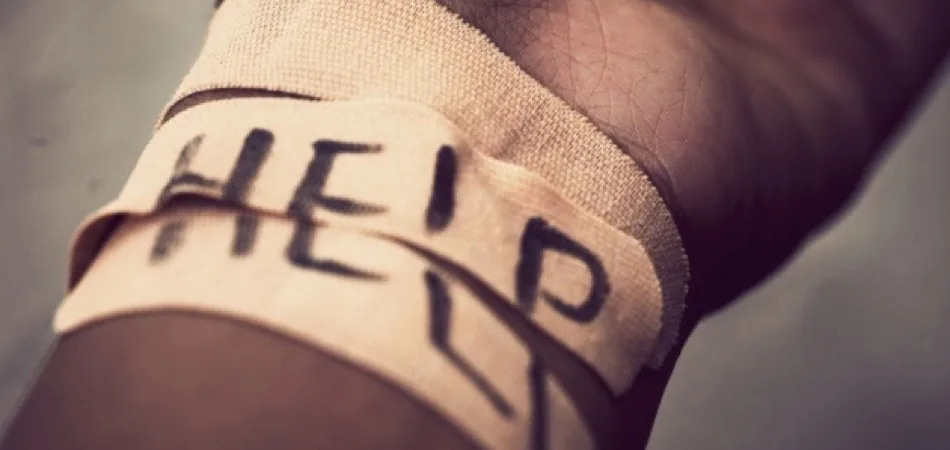
Externalization is the key point. Nothing can be ignored, buried, or simply forgotten. Even if in human life, this can often seem easier in the face of a painful episode… What we feel is ultimately always destined to be expressed, whether consciously or not. But in the second case, it is very often the Body that takes care of this expression, through somatization – and therefore pathology – to convey a message, a cry for help, for attention.
The practitioner uses the unity of Body and Mind: by working on the former, the goal is to make the latter aware of ignored perverse energies. The pathology can then disappear.
"What the Mind wants, the Body does"
Among the best-selling books illustrating this heritage of TCM: "La maladie cherche à me guérir" (Disease seeks to heal me) (Dransart), "Dis-moi où tu as mal, je te dirai pourquoi" (Tell me where you hurt, I'll tell you why) (Odoul).