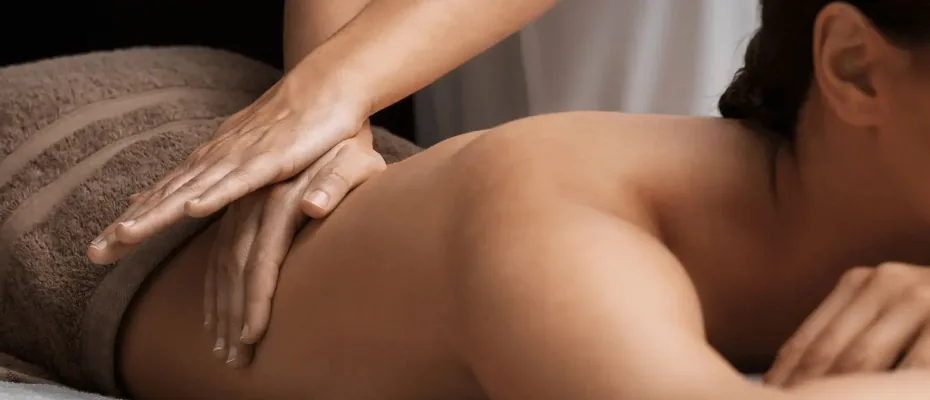
After more than 10 years of supporting my patients in their quest for well-being, I have observed a remarkable constant: those who incorporate massage into their monthly routine develop exceptional resilience to daily tensions. This is no accident, and today, I would like to explain why receiving a massage one to two times a month is not a luxury, but a true investment in your health capital.
When the body speaks, massage responds
We live in a world where stress has become our silent companion. Our body, however, never stays silent for long. It sends us signals: that tension in the shoulders that sets in at the end of the day, that back pain that faithfully returns every Monday, or those nights when sleep is elusive.
In Chinese medicine, we consider health to rely on the free circulation of vital energy, Qi, throughout the body. When this circulation is hindered by stress, poor posture, or muscular tension, blockages form. This is precisely where massage acts as a powerful therapeutic tool.
How and why massage transforms your body
Let me explain what is actually happening in your body, because understanding these mechanisms will help you grasp the full value of regular massage.
The vicious cycle of muscle stiffness
Have you ever wondered why your muscles become hard and stiff? This phenomenon is not an inevitability of aging; it is a physiological response to our lifestyle.
When we are stressed or maintain prolonged static postures, our muscles remain in a slight but permanent contraction. This chronic tension creates areas of fibrosis where muscle fibers, normally flexible and elastic, become rigid and lose their ability to relax. It's as if they "forget" how to relax.
At the same time, blood and lymphatic circulation in these areas slows down. Metabolic toxins accumulate, oxygenation decreases, and a vicious cycle sets in: the tense muscle compresses the vessels, which further aggravates stiffness. In Chinese medicine, we speak of stagnation of Qi and blood.
How massage breaks this cycle
Massage acts simultaneously on several levels to reverse this process:
Mechanically, pressures, kneading, and mobilizations warm the tissues and stimulate circulation. Muscle fibers regain their elasticity, fascia release, and the muscle "remembers" its primary function: to contract when necessary and then relax. This regained flexibility protects your joints, improves your posture, and releases your vital energy.
Biochemically, every time your muscles are massaged, your body triggers a cascade of beneficial reactions. Scientific research has shown that regular massage leads to a significant decrease in cortisol, the stress hormone which, in excess, weakens our immune system and disrupts our sleep.
Simultaneously, your body releases endorphins, these "natural painkillers" that relieve pain, as well as dopamine and serotonin, our mood neurotransmitters. It is this alchemy that explains the sensation of deep well-being that lingers for several days after a session.
Energetically, according to Chinese medicine, massage unblocks the meridians and allows Qi to circulate freely again. This free energetic circulation is inseparable from health: when energy stagnates, imbalances appear; when it circulates, the body regains its natural harmony.
The three complementary approaches
In my practice, I offer three types of massage which, although different in their approach, all share this ability to restore body balance.
Tui Na — Chinese + Number: the millennial heritage
Tui Na is the art of Chinese therapeutic massage. Through pressures, kneading, and joint mobilizations, we work directly on the acupuncture meridians to restore the circulation of Qi. It is not simply a massage; it is a true treatment that acts deeply on your internal organs and your energy system. This is the beauty of this holistic approach: by treating cervical tension, one can simultaneously improve digestion or headaches.
Deep Tissue — Chinese + Number: getting to the deep tension
Deep Tissue massage, or deep tissue massage, gradually works on the deep muscle layers. This technique is particularly effective for releasing muscle knots. Studies have shown that it significantly improves blood circulation in the tissues, which promotes the elimination of accumulated toxins and accelerates muscle recovery. For athletes or those in physically demanding professions, it is often the massage of choice.
Relaxing massage: the art of relaxation
With fluid, enveloping, and rhythmic movements, this massage activates the parasympathetic nervous system, the one that governs our rest and recovery. It's as if we give your body permission to slow down, to breathe, to let go. By calming the nervous system and reducing muscular tension, the body naturally regains its optimal resting rhythm and sleep quality improves.
Why regularity changes everything
Imagine your body as a house. You can wait for problems to accumulate before intervening, or you can choose regular maintenance that will prevent major damage. Massage works on the same principle.
When you receive a massage one to two times a month, you create a remarkable cumulative effect. Your body begins to "learn" to relax more easily. Tensions no longer have time to settle in permanently. Your immune system, freed from the burden of chronic stress, functions optimally. Research has even shown that regular massage increases the number of lymphocytes, those cells that constitute our first defenses against infections.
Concrete daily benefits
Physically
Massage acts as true body maintenance. By mechanically stimulating tissues, it improves cellular oxygenation and promotes the elimination of metabolic waste. The fascia, these membranes that envelop each muscle, regain their elasticity and allow for more fluid movement. This flexibility translates concretely into better joint range of motion, a more natural posture, and a reduction in chronic pain. The body becomes less vulnerable to injuries because softened tissues better absorb daily shocks and stresses.
Emotionally and mentally
Our autonomous nervous system functions as a balance between two states: the sympathetic (action, alert) and the parasympathetic (rest, recovery). Chronic stress keeps this balance skewed towards the sympathetic. Massage, through its action on cutaneous and muscular receptors, sends powerful signals to the brain to activate the parasympathetic. This neurological shift results in a lower heart rate, a slower breathing rhythm, and a decrease in the production of stress hormones. Over regular sessions, the nervous system "re-educates" itself and regains a natural ability to switch more easily to rest, thus improving stress management and sleep quality.
Energetically
According to the principles of Chinese medicine, regular massage maintains harmony between Yin and Yang by releasing blockages on the meridians. When energy circulates freely, our Wei Qi (defensive energy) strengthens, which explains why people receiving regular massages get sick less often. This notion may seem abstract, but it finds an echo in scientific discoveries about the immune system: a relaxed body, well-irrigated and where energy circulates, produces more immune cells and better regulates inflammation.
How to integrate massage into your life
Ideally, space your sessions two to four weeks apart. This frequency allows you to maintain the benefits obtained while giving your body time to integrate the work done. For some people going through a particularly stressful period or suffering from significant chronic tensions, a weekly frequency may be temporarily recommended.
The essential thing is to find your rhythm. Listen to your body. You will know that the frequency is appropriate when you do not fall back into your usual tension patterns between sessions.
An invitation to self-care
In our society that values constant performance, self-care is sometimes perceived as a superfluous act. I invite you to reverse this perspective: taking care of your body through regular massage is giving yourself the means to be fully present for others, in your work, in your relationships, in your life.
Massage is not a reward for overwork; it is a necessity for maintaining balance. In Chinese medicine, we say that "prevention is better than cure". This ancient wisdom finds a remarkable echo in modern scientific discoveries that confirm the preventive virtues of regular massage.
Every body is unique; each person carries within them a story inscribed in their tissues.
If you are still hesitant, I simply invite you to try. Commit to three months of regular massages and observe how your body responds, how your sleep evolves, how your relationship to stress transforms. The body never lies: when given the conditions for its balance, it repays us a hundredfold.