Chinese Cupping in Meudon (92)
Cupping is one of the oldest therapeutic techniques in Chinese medicine. Practiced for over 3000 years, this method uses the depression created by glass or bamboo cups to mobilize deep tissues, improve circulation, and release energetic stagnations.
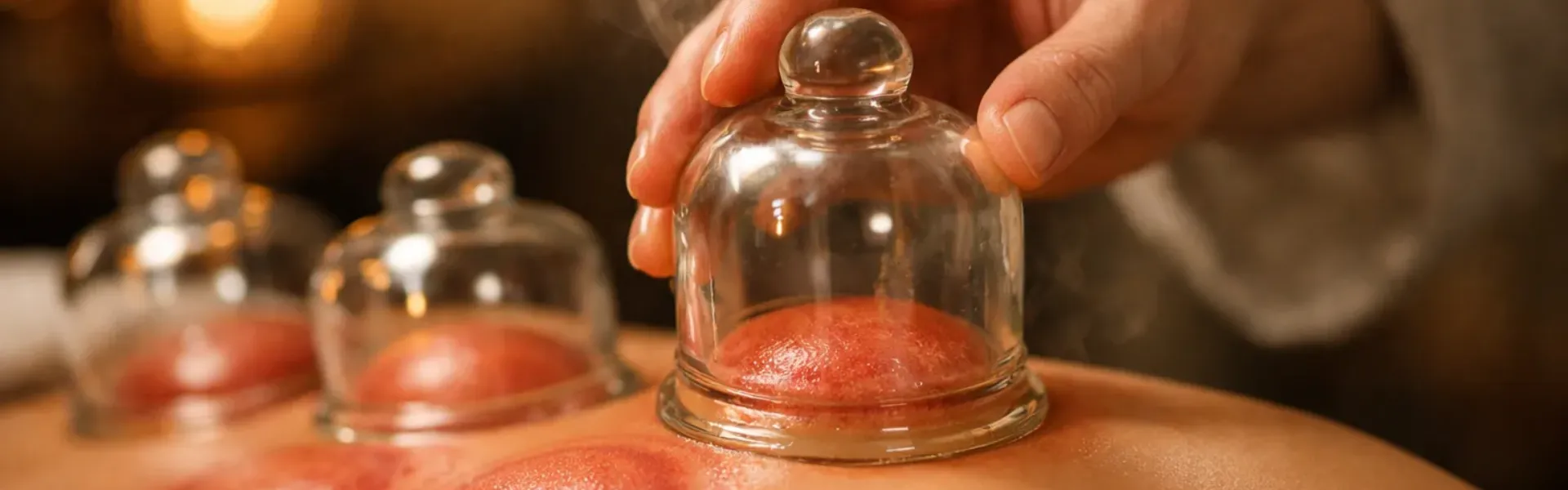
Although they may seem impressive at first, cupping is a gentle and profoundly effective technique. They work by suctioning tissues, creating a local blood flow that decompresses congested areas, drains toxins, and reactivates natural repair processes. This approach is particularly valuable for deep muscle pain, chronic tension, and circulatory disorders.
Traditional Chinese Cupping
How does cupping work?
In Chinese medicine, cupping eliminates what are called stagnations of Qi and Xue (blood). These blockages manifest as pain, stiffness, a feeling of heaviness or oppression. The suction created by the cup draws these stagnations to the surface, allowing their dispersion and the restoration of fluid circulation.
From a Western physiological perspective, cupping produces several measurable effects:
Tissue decompression
Unlike massage which compresses tissues, cupping lifts and decompresses them, releasing deep fascial adhesions.
Circulatory stimulation
The suction causes a massive blood flow that oxygenates tissues, accelerates the elimination of metabolic waste, and promotes regeneration.
Anti-inflammatory action
The controlled micro-trauma created by cupping triggers a healing response that reduces chronic inflammation.
Lymphatic drainage
The suction effect stimulates the lymphatic system, facilitating the elimination of toxins and the reduction of edema.
The circular red-purple marks sometimes left by cupping are not bruises or hematomas. They indicate the extraction of deep stagnations to the surface. The more congested the area, the more pronounced the marks. These traces fade naturally within 3 to 7 days and are neither painful nor concerning.
Therapeutic indications
Cupping is particularly effective for a wide range of ailments, especially those related to stagnations and circulatory blockages. Here are the most common applications:
- Deep muscle pain: contractures, chronic tension, persistent soreness
- Back and lumbar pain: lumbago, back tension, knotted areas
- Neck pain and tension: cervical stiffness, torticollis, tight trapezius muscles
- Respiratory disorders: bronchitis, persistent cough, lung congestion, asthma (in non-acute phase)
- Circulatory disorders: heavy legs, venous stasis, cellulite
- Migraines and headaches: cranial tension, chronic migraines
- Chronic fatigue: exhaustion, lack of vitality, sports recovery
- Detox support: drainage, toxin elimination, immune system support
Different cupping techniques
There are several methods of applying cupping, each adapted to specific needs. I choose the technique based on your issue and your tolerance.
Fixed cupping
The most classic method: cups are placed on precise areas and left in place for 5 to 15 minutes. This technique is ideal for treating localized pain, deep stagnation areas, or specific acupuncture points. Progressive suction allows for deep decompression of congested tissues.
Sliding cupping
After applying massage oil, the cups are moved along the meridians or tense muscle areas. This technique combines the benefits of cupping and massage, allowing to treat larger surfaces. It is particularly effective for the back, shoulders, and thighs. The sensation is deep but generally pleasant.
Flash cupping
Cups are applied and removed quickly, repeatedly over the same area. This gentler method is suitable for sensitive people, fragile areas, or when aiming for stimulation without creating significant marks. It is often used on the face (smaller cups) to tone tissues and improve complexion.
Wet cupping (optional)
A technique reserved for specific situations: after a superficial micro-incision, the cup is applied to extract a small amount of stagnant blood. This ancient method is particularly effective for heat stagnations, certain skin conditions, or very localized and intense pain. It requires your informed consent and is only performed if necessary.
Session flow
Cupping is rarely used alone. It is generally integrated into a complete Chinese medicine session, in addition to acupuncture or Tui-Na.
Preliminary discussion and observation
As with any Chinese medicine technique, I begin with a preliminary discussion. We discuss your symptoms, I examine the affected areas, and determine if cupping is appropriate. I explain the technique that will be used and the sensations you might feel.
Cupping application
You are comfortably positioned, most often lying on your stomach to treat the back, or on your back for the chest. I create a vacuum in the cups (by flame for traditional glass cups, or by pump for plastic cups) and apply them to the chosen areas. You will feel a sensation of suction, traction, sometimes slight warmth. This sensation can be intense at first but quickly subsides. Fixed cups remain in place, while sliding cups are slowly moved across your skin.
Removal and observation
I gently remove the cups by creating a small air inlet. I then observe the marks left: their color and intensity inform me about the energetic state of the treated area. A bright red indicates good circulation, a dark purple signifies significant stagnation that has been mobilized. This information guides the rest of the treatment.
Complementary treatment
Depending on your situation, I may complement with acupuncture to refine the energetic work, moxibustion to warm and tonify, or lifestyle recommendations adapted to your situation. The goal is to enhance the effect of cupping and support your body in its rebalancing process.
My practice
I use cupping in an integrative approach to Chinese medicine. They are never an isolated treatment, but are part of a global therapeutic strategy based on your overall situation. Some patients benefit from cupping at each session, others only occasionally depending on the evolution of their condition.
I systematically adjust the intensity and duration according to your sensitivity and constitution. If you are sensitive or if it is your first experience with cupping, we start gently to familiarize you with the technique. The goal is always relief, never excessive discomfort.
The clinic is located at 9 rue Paira in Meudon, an 8-minute walk from Meudon Val Fleury RER station (line N). It is a space designed for your comfort and conducive to quality therapeutic work.
Frequently Asked Questions
Is cupping painful?
The sensation of cupping is unique but rarely painful. You will feel a suction, a pulling of the tissues upwards, sometimes a sensation of warmth. The intensity can be surprising at first, but most patients quickly get used to it and even find it pleasant. If the sensation becomes too intense, I can adjust the suction or remove the cup immediately. After the session, the treated area may be slightly sensitive for a few hours, like after a deep massage, but it should not be painful.
Are marks always present?
Marks depend on several factors: the intensity of the suction, the duration of application, but above all, the state of your tissues. A very congested or stagnant area will leave more pronounced marks, while a healthy area will remain clear or slightly pink. The marks reflect your internal state, not trauma. They gradually fade within 3 to 7 days depending on the person. If you have an important event (wedding, photos, beach) in the following days, let me know: I can adapt the technique or avoid certain visible areas.
How often can one have cupping?
For the treatment of a chronic problem, one session per week for 4 to 6 weeks can yield significant results. For maintenance or occasional acute pain, one session every 15 days or once a month may be sufficient. It is not recommended to perform cupping on the same area more than once a week, as tissues need time to regenerate after treatment. I will guide you on the optimal frequency based on your response to the treatment.
Are there any contraindications?
Cupping is contraindicated in cases of open wounds, skin infections, sunburn, active eczema or psoriasis on the area to be treated. It is not recommended in cases of coagulation disorders, strong anticoagulant treatment, recent thrombosis or phlebitis. During pregnancy, certain areas are avoided as a precaution (lower back, abdomen). In case of fever, uncontrolled hypertension or extreme fatigue, it is better to postpone the session. We evaluate these aspects together during the first appointment.
What to do after a cupping session?
After a session, hydrate well to facilitate the elimination of mobilized toxins. Avoid exposure to cold or drafts for the next 2-3 hours, as pores are open and your body is in a rebalancing phase. It is also best to avoid alcohol and heavy meals on the day of the session. Some people feel slight fatigue or soreness the next day – this is normal and indicates that your body is working. If you have any concerns, do not hesitate to contact me.