Through my practice, I observe various ailments. Multiple and varied in their expression, yet one similarity unites them: the neglect of the emotional factor.
In our Western culture, it is common to care for our body, the material aspect of our being. But what about the ethereal aspect? If I had to remember ONE thing to this day, it would be the importance of this dimension from which 90% of our suffering (physical and/or psychological) originates. This is the very essence of TCM.
Certainly, this aspect remains delicate to master and requires a certain awakening… But we can shed light on common habits that exacerbate the influx of negative emotions and are detrimental to us. Here are a few, which I try to summarize as best as possible; feel free to share your personal experiences in the comments!
1. Inappropriate Diet
“Long meals make short lives” – English
“Man digs his grave with his teeth” – French
“A well-filled stomach does not study willingly” – German
“A thick belly does not beget a subtle mind” – Greek
“If you hate your son, feed him too much” – Japanese
In these short maxims, we find the same truth among all peoples. The quality and quantity of food are fundamental. They influence our psyche, and this influence must be favorable to avoid degeneration.
Quality: each food is capable of modifying our behavior. Meat stimulates our aggressive instincts, sugar projects us into a depressive state, etc. By consciously observing these subtle changes, we learn to moderate: excess spices, coffees, alcohols, sugars and their processing, animal fats, chemically treated vegetables/fruits. Far from the exclusiveness of diets, the art of living consists of adapting food to variations in seasons, place, activity, and state of health (Cf. Dietetics). Finally, the meal should be a conscious act, an active meditation, a pleasant moment of relaxation.
Quantity: we eat too much. This tendency comes from the excessive use of refined products (salt, sugar, oil, etc.) and the habit of eating until satiated, 3 times a day! This is unprecedented since the beginning of our evolution. However, the belly constitutes our emotional center. It is important to spare it and consider the work of our organs, especially before bedtime – a moment of relaxation for our body. For this reason, the Chinese dine relatively early compared to Western standards.
2. Insufficient Physical Activity
The body – Yin – needs movement. The spirit – Yang – needs calm.
Today, we generally observe the opposite: a near-permanent sedentary lifestyle (sitting position), coupled with intellectual overwork. In this context, stagnation allows a continuous flow of thoughts/worries/cogitations, which in turn hinder any motivation for movement, due to exhaustion. This vicious circle can then last until implosion.
Physical exercise “yangifies” our body: the production of heat and Qi is stimulated, thus facilitating the circulation of organic fluids, while the secretion of endorphins is boosted (Cf. the famous « runner's high » for example). The trend then reverses: the body gets rid of accumulated toxins, congested circuits are freed, blood is renewed, the mind brightens.
Be careful not to confuse: running around frantically under stress (professional/personal)… is not physical activity!
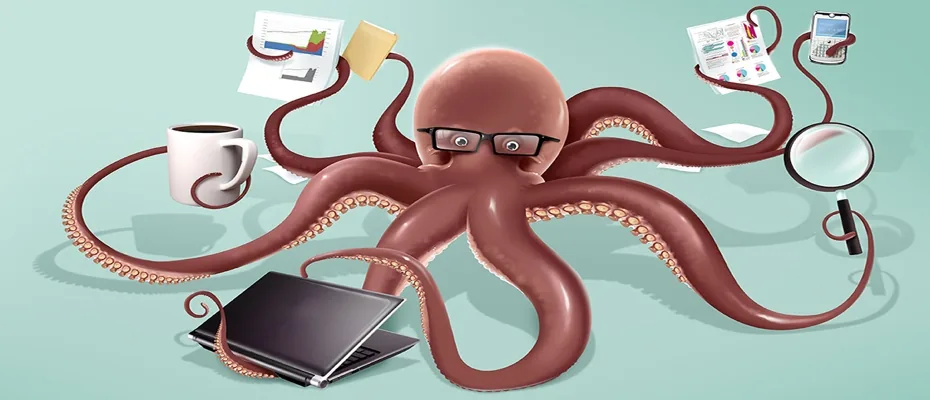
3. Overwhelming Professional Stress
“There is no stress but the one we impose on ourselves”
Phone, emails, instant messaging… Hyper-connected, the boundary between professional and private spheres can easily disappear. And hierarchical pressure does not make things easier.
From this explosive cocktail then arises stress, stimulating at first, then exhausting. In the long term, various disorders can appear: irritability, aggressiveness, depression, burnout, etc. (Cf. Stress).
However, it is up to each individual whether or not to let stress persist. The predominant importance given to work is often the cause, driven by the fear of “not performing” in a materialistic society, always clinging to the illusion of happiness through performance and gain. A better balance between work and pleasure allows for genuine and salutary perspective.
Being stressed is a choice. Those who claim otherwise are simply afraid to admit it.
4. Overexposure to Screens
First thing in the morning… Do you get up by looking at your phone? We communicate, organize our time, work, and entertain ourselves through screens: smartphone, computer, tablet, television. Our eyes take a beating!
Bombarded with photons, our brain is kept active. All the time. Moreover, sight is the sense connected to the Liver, the organ of emotions par excellence. By constantly capturing the 5 colors (of the 5 elements of Chinese medicine), the Liver's energy is overstimulated, leading to irritability, migraines, aggressiveness, etc. (Cf. The Liver).
No long speech… put away the tablets, and take out (paper) books.
5. Lack of Downtime
Multitasking and productivity are values promoted today. One “must” maximize the utility of their time, both professionally and personally. Inactivity is perceived as useless, and any potential opportunity for calm is filled with an activity or entertainment.
When was the last time you sat doing nothing? And how long did it last?
According to a well-known principle of physics, “inertia is the resistance that a body opposes to a change in its motion.” This concept also applies to our organism, for which returning to calm is difficult. Yet this can be worked on, particularly through meditation and conscious breathing.
Downtime is essential for rejuvenation.
6. The Race for Material Possessions
“A poorly cultivated life engenders suffering”
In my opinion, this point can summarize everything else.
We evolve within circles of influence (school, culture, religion, friends, family, work, etc.) to which we adhere from birth. We thus build our own scale of values, on which our judgment and choices are based.
However, in the absence of perspective on this, these “pre-programmed” (and often materialistic) decisions cannot be in line with our deep aspirations. This results in a discrepancy between real desires and “mechanical habits,” devoid of meaning. It is precisely this discrepancy that generates the pain of a people in search of spirituality.
Aware of this void but unable to explain it, we rush into excesses in the hope of filling it. In search of always more, the present moment is sacrificed, invaded by fear and aggressiveness.
Our unconscious calls us to order through the ailments of the body, its only means of expression. This reminder invites us to nurture our neglected emotions and return to moderation and inner balance.