Deep Tissue Massage in Meudon (92)
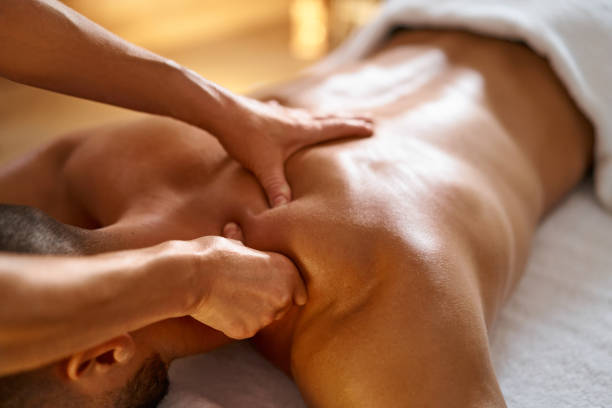
The deep tissue massage is a therapeutic technique that targets the deeper muscle layers of your body. Unlike a relaxation massage that works superficially, deep tissue reaches the fascia, these membranes that envelop your muscles, as well as the trigger points – those painful knots that limit your mobility and radiate pain.
This approach combines firm and slow pressure, deep stretches and precise work on chronic tension areas. The goal is not to "massage hard for the sake of massaging hard", but to access deep structures to free them from adhesions and restore their optimal function.
In my practice, I integrate the principles of Chinese medicine into deep tissue massage: I don't just work on contracted muscles, but also on the meridians and energetic blockages that maintain these tensions. This combined approach offers deeper and more lasting results.
Your Deep Tissue Massage in Meudon
How deep tissue massage works
Your chronic pain, persistent stiffness, that feeling of being "blocked" don't come from nowhere. They are the result of accumulated tensions that have crystallized in your deep tissues.
Release of fascial adhesions
Stress, poor posture and micro-traumas create adhesions in your fascia. These "stickings" limit your range of motion and create painful compensations.
Deactivation of trigger points
Trigger points are hyperirritable areas in the muscle that refer pain elsewhere. A point in the shoulder can cause a migraine, a point in the buttock can radiate into the leg.
Improved circulation
Deep massage increases blood and lymphatic flow in congested areas, facilitating oxygen supply and the elimination of metabolic waste such as lactic acid.
Postural reorganization
By releasing deep tensions, the body naturally regains better postural alignment. Compensations decrease, mobility improves, chronic pain subsides.
Deep tissue massage doesn't just "relax" your muscles – it restructures your deep tissues to allow them to regain their natural glide and optimal function.
Therapeutic indications
Deep tissue massage is particularly effective for:
- Chronic back pain: low back pain, back pain, persistent neck tension
- Muscle stiffness: frozen shoulders, stiff neck, limited range
- Sciatica and radiating pain: nerve compressions related to psoas and piriformis tensions
- Carpal tunnel syndrome: forearm tensions and median nerve compression
- Chronic tendinitis: tennis elbow, shoulder tendinitis, plantar fasciitis
- Fibromyalgia: diffuse muscle pain and multiple tender points
- Sports recovery: post-training tensions, competition preparation
- Posture and imbalances: hyperlordosis, kyphosis, pelvic tilt
- Chronic somatized stress: muscle tensions related to emotional stress
Deep tissue massage and Chinese medicine
In my practice, I never separate the physical from the energetic. A constantly contracted muscle is not just a mechanical problem – it is also a Qi blockage.
For example, chronic trapezius tensions are often linked to a Gallbladder meridian blockage, itself connected to suppressed emotions of frustration and anger. Massaging only the muscle without treating the underlying energetic imbalance will provide temporary relief, but the tension will return.
This is why I integrate:
- Work on the meridians to restore Qi circulation
- Stimulation of strategic acupuncture points during the massage
- An energetic reading of your tensions (which organ is affected, which emotion is involved)
- Dietary and lifestyle advice according to your TCM constitution
This integrative approach achieves deeper and more lasting results than a purely mechanical massage.
Course of a deep tissue session
Postural observation and palpation
I observe your posture standing and in motion. I palpate tense areas to identify contracted muscles, active trigger points, and fascial restriction areas. I also draw on Chinese medicine principles to understand the underlying imbalance.
Tissue warm-up
I start with softer techniques to warm up superficial tissues and prepare your body for deep work. This step is essential: one cannot work deeply on a cold and contracted muscle without creating resistance.
Deep work
I use my forearms, elbows, and thumbs to reach deep muscle layers. The work is done slowly, with firm but progressive pressure, always in dialogue with your body. I treat trigger points one by one, release fascial adhesions, and work on the affected meridians. You may feel a constructive pain – intense but tolerable, which decreases as the muscle releases.
Complementary techniques
Depending on the needs, I integrate passive stretches, myofascial stretching, cupping to decompress tissues, or acupressure on key energetic points. The goal is to maximize tissue release and reorganization.
Calm down and advice
I finish with gentler maneuvers to integrate the work. I provide you with specific stretches to practice at home, advice to maintain the benefits of the session, and recommendations according to your situation.
What you might feel
During the session
Deep tissue massage is not a relaxing spa massage. It is therapeutic work that can be intense. You will feel firm pressure, sometimes a sensation of "good pain" – this constructive pain indicates that the right structures are being reached. Some trigger points can be particularly sensitive. The important thing is to communicate: the intensity must remain within your tolerance zone so that your body accepts the work and does not contract in resistance.
After the session
It is common to feel a beneficial soreness in the following 24-48 hours – similar to after a muscle workout. This is a sign that the deep tissues have been stimulated and are reorganizing. You may also experience significant fatigue (your body mobilizes energy to repair itself), intense thirst (hydration necessary to eliminate toxins), and gradually an improvement in mobility and a decrease in pain.
"Chronic pain is not inevitable. It is a signal that something needs to be released in the depths of your tissues."
My practice of deep tissue massage
My approach to deep tissue is rooted in two complementary traditions: Western anatomical knowledge (biomechanics, fascia, trigger points) and the energetic vision of Chinese medicine (meridians, Qi, organ-emotion links).
This dual perspective allows me to understand not only where your tensions are, but also why they persist. A constantly contracted psoas can be linked to a Qi deficiency in the Kidneys and chronic fear. Knotted trapezius muscles can reflect a liver blockage and suppressed anger. By treating both dimensions – physical and energetic – the results are deeper and more lasting.
Frequently asked questions
Is deep tissue massage painful?
It can be intense, but should never be unbearable. There is a difference between "good pain" (a sensation of deep pressure that gradually relieves) and bad pain (a tearing sensation, contraction in resistance). I always adapt to your tolerance threshold. The intensity should allow you to remain relaxed and breathe deeply – this is key for the work to be effective.
What is the difference with a Swedish or relaxing massage?
A Swedish or relaxation massage works primarily superficially to relax and improve circulation. Deep tissue specifically targets the deep muscle layers, fascia, and trigger points to treat chronic problems. The intention is not relaxation (although it can occur), but the therapeutic release of structural tensions.
How many sessions are needed?
For recent acute pain (stiff neck, sudden movement), 1 to 3 sessions may be sufficient. For chronic tensions that have been established for months or years (recurrent back pain, fibromyalgia, unbalanced posture), expect 6 to 10 sessions spaced one to two weeks apart. Deep tissues reorganize gradually – you cannot undo 10 years of tension in one session.
Can I exercise after a session?
It is recommended to avoid intense efforts within 24-48 hours after the session. Your body needs time to integrate the work and repair the beneficial micro-traumas created by the massage. Opt for gentle walking, light stretches, plenty of water, and rest. Gradually resume your intense activities after 48 hours.
Are there any contraindications?
Yes. Deep tissue massage is not recommended in cases of: deep vein thrombosis, recent fracture, acute infection or inflammation, severe osteoporosis, evolving cancer, strong anticoagulant medication. Certain areas are avoided in cases of herniated disc or active nerve lesion. We discuss your medical situation during the first appointment.