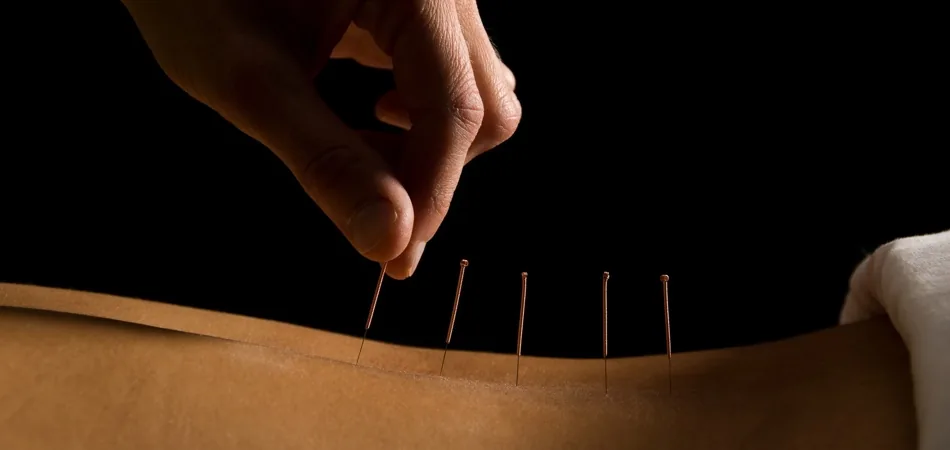
Acupuncture is generally the first discipline that comes to mind when talking about TCM (Traditional Chinese Medicine). Rightly so, as it was the subject of articles in the Western press as early as the 1930s, at a time when it proved effective in the fight against cholera!
This term of Latin origin means "pricking with a needle". The therapy here consists of inserting fine needles into specific points on the body, which, connected to each other, form the meridians, along which a person's Qi (or vital energy) circulates. The points thus stimulated are chosen by the practitioner to dissipate any blockage or energetic imbalance, thereby allowing an improvement in the overall health of the body. This technique can be used alone, or in combination with moxibustion.
Physiologically, the prick causes a release of endorphins, providing a rather soothing sensation. The needles used are sterile, single-use, "solid" (not used for injecting or drawing fluid), and have an average diameter of 0.25mm. In other words… no pain! Only the sensation of "Deqi" is felt by the person being pricked when the point is correctly stimulated: for some it is a tingling, for others a numbness or even warmth or an electric current along the path of the meridian. The practitioner will also feel a subtle effect, comparable to a "fish bite".
Therapeutic Effects
Non-exhaustive list of conditions that can be effectively treated by acupuncture:
- Respiratory disorders: asthma, emphysema, chronic cough, allergies, etc.
- Dermatological disorders: eczema, psoriasis, shingles, acne, etc.
- Circulatory disorders: palpitations, heart problems, hyper/hypotension, etc.
- Digestive disorders: constipation, diarrhea, nausea, vomiting, dysentery, etc.
- Sensory and facial disorders: tinnitus, otitis, sinusitis, vision problems, etc.
- Emotional and psychological disorders: anxiety, insomnia, eating disorders, depression, stress, migraines, etc.
- Joint disorders and pain: rheumatism, sciatica, back problems, inflammation, etc.
- Neurological disorders: epilepsy, neuralgia, etc.
- Gynecological and urogenital disorders: menstrual disorders, enuresis, impotence, urinary retention, infertility, etc.